


Call or WhatsApp a thesis supervisor
+31614592593

Written by: Mirjam de Winter
Last updated on: January 20, 2026
Do you struggle with motivation? Do you find it difficult to stay motivated while finishing your thesis? Are you a chronic procrastinator or does your motivation just drop while writing your thesis? You are not alone. Many students find it hard to stay motivated during the thesis process, and once you fall behind, it becomes even harder to regain momentum.
The result? Stress! Procrastination, fear of failure and perfectionism are familiar obstacles during the thesis process. You delay, start doubting yourself and lose sight of what you are doing.
What is the solution? A clear plan with mini-deadlines that helps you maintain your motivation for your thesis and your overall study and finally finish your thesis.
If you find it hard to stick to those mini-deadlines, don’t worry! Together we create a concrete study or thesis schedule and help you stick to it. You will reach your goal: graduation!
Your personal guide from Topscriptie acts as your accountability partner and gives you that extra push. We help you move from thinking to doing. It is even possible to work together in a structured way, starting with a video call and keeping the momentum going. By scheduling all appointments with you right away, there are no excuses to keep postponing your work.
Do you want a plan to finally graduate? Contact us and we will help you create a clear plan!
Call or WhatsApp a thesis supervisor
+31614592593
Call or WhatsApp a thesis supervisor

We distinguish between two different styles of motivation in students. The first is avoidant motivation (“away from”), and the second is approach motivation (“towards”). Which style you lean toward depends on context and moment. For example, you may show more approach motivation when it comes to things you enjoy, and more avoidant motivation around tasks you find stressful. It’s important to realize that both styles are present in everyone, but you will likely favour one style.
Research from NLP shows that about 60 % of people are primarily avoidantly motivated, 25 % are approach-motivated, and 15 % show both styles equally.
If you know what you truly want to do and achieve, get energized by making (future) plans, and use mostly positive language (“I will do” and “I want”) instead of “I won’t” or “I don’t,” you likely have a preference for the approach style. This can provide stability and clear direction.
Tips: Be aware that with approach motivation you can sometimes be overly optimistic and overlook problems in your thesis. Don’t let negative feedback from instructors discourage you—it’s part of the learning process. Think in clear steps to solve issues and move forward.
If you are more avoidantly motivated, you often focus on things you don’t want to do. These students find it difficult to answer the question “What do you want?” and tend to avoid challenges or negative feedback. You may find it hard to focus on clear goals like finishing your thesis.
Tips: You may need to motivate yourself repeatedly, get easily distracted, and find motivation low. Celebrate small achievements (like finishing a chapter or completing SPSS results) and stop avoiding tasks. Keep your long-term goals in mind—think about what you want in three years (e.g. your dream job, travel, owning a home or starting a business). Thinking in future terms moves you closer to your goals and increases motivation.
The most important thing to get motivated again is to see your thesis (or study) as a positive challenge rather than a chore. Try to choose a topic you enjoy when possible. Below are some tips to boost your motivation:
 Break it down into small steps to keep overview and momentum. Use interval goals (e.g. 2–4 tasks instead of a fixed number). Start writing even if it’s not perfect; revise later. Celebrate small accomplishments. Minimize distractions (apps that block social media can help). Plan deliberate work times and breaks. Find an inspiring environment: a library, café, or study space.
If you struggle to stay motivated during your graduation project, the Ikigai model can help. This Japanese framework maps out what you love, what you’re good at, what the world needs, and what you can be paid for. The overlap of these four circles is your Ikigai—your reason for being.
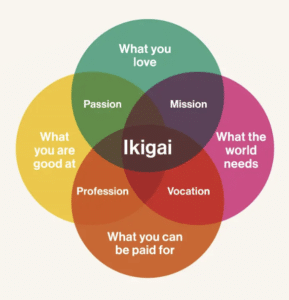
For students, using Ikigai exercises can help reconnect your thesis to your deeper motivations and future goals.
• You gain clarity about what truly drives you.
• Your topic feels more meaningful and easier to keep up with.
• You connect your study directly to your future, boosting motivation.
Do you also experience low motivation while writing your thesis? Many students who receive one or more sessions of personal guidance report more motivation, inspiration, and less graduation stress.
Contact us today for a free intake and learn how we help you manage stress and finish your thesis.